
Before the lid closes
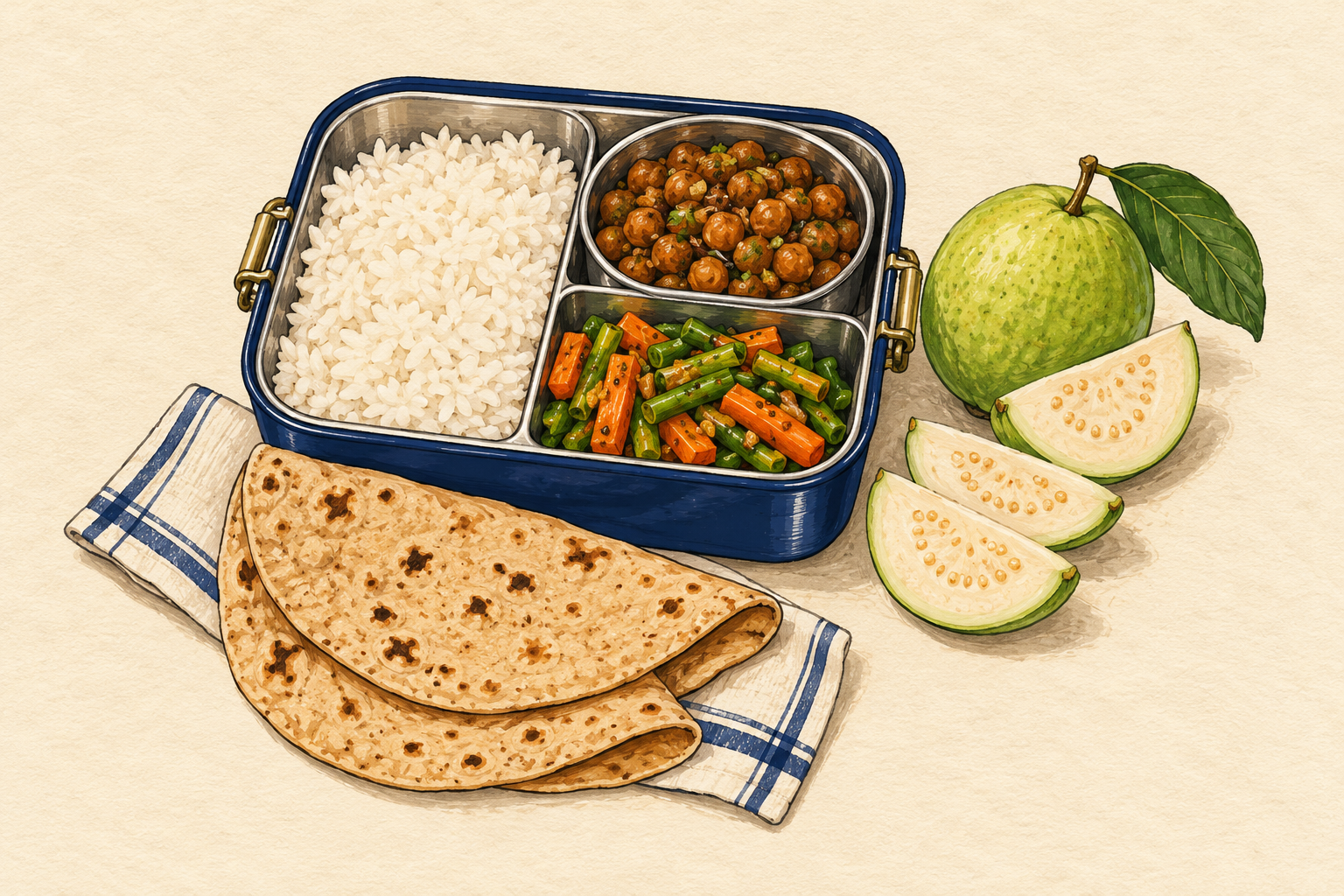
An imagined morning: lunch is nearly packed. Rice in one compartment, curd in another. The dal is still on the stove. You pause before closing the lid.
For more fibre, look at what can accompany your staple. Pulses, vegetables, fruit and whole grains offer useful options across the day. The next choice could be the dal already cooking.
Give the staple some company
The rice-versus-roti question can miss the rest of the meal. Fibre is itself a type of carbohydrate found in plants; avoiding every carbohydrate would also remove foods that supply it.
WHO recommends getting carbohydrates primarily from whole grains, vegetables, fruit and pulses. Think about those sources across your ordinary day. Dal with lunch, a vegetable dish at dinner or whole fruit later are different opportunities. They are examples to adapt, without forcing every food into one sitting.
Where can fibre fit?
Across your day
Pulses
Dal, rajma, chana
Whole grains
Oats, whole-wheat roti
Vegetables & fruit
Sabzi, whole fruit
A bowl is not a fibre count
You reach for a container for the dal. Here is the detail worth remembering: the container cannot tell you its nutrient content.
Imagine two bowls with the same serving volume. One recipe uses more lentils; the other more water. Both can be called “one bowl of dal”, although they contain different amounts of lentils. A full-looking bowl is not enough information for a fibre calculation.
To estimate the amount you ate, you would need the ingredients, preparation, recipe yield and actual serving. NHS guidance makes the same practical point: fibre content depends on how food is prepared and how much you eat.
So use the lunchbox to recognise a useful food source. For a measured food plan, use actual recipe and portion information with appropriate professional guidance.
Evidence: [2]
Make the choice easy to repeat
Back in the imagined kitchen, the dal is available. The useful decision is when it gets packed. A preparation cue could be: “When I portion lunch, I pack the dal.”
Another day may offer different choices. A vegetable dish might be ready; whole fruit could fit later. Choose foods that suit your preferences, budget and routine. These examples do not specify portions or establish that a daily target has been met.
Increase fibre gradually. A sudden increase can cause gas, bloating or cramps. If you have a prescribed diet, a digestive condition or persistent symptoms, seek guidance suited to you before making substantial changes.
Three reminders for the fridge
Give it a cue.
If dal is your available choice: “When I portion lunch, I pack the dal.”
Leave room elsewhere.
Whole fruit or a whole-grain choice can fit another meal. Look across the day.
Build up gradually.
Increase fibre gradually; sudden changes can cause gas, bloating or cramps.
Look at the day, not just the box
WHO gives adults a general reference of at least 25 grams of naturally occurring fibre a day. That is a whole-day guide, not an amount that must fit into this lunch.
Closing the lid with dal inside is one specific choice in our imagined scene. It does not prove the day’s fibre total. That distinction lets you make a practical change while keeping the claim honest.
Evidence: [1]
Match the next question to the right support
Food choices and exercise both deserve specific attention. Adding a fibre source does not promise fat loss; a training session does not establish whether your diet meets your needs.
At IMFIT Madhapur, individual fat-loss and functional training and small-group transformation are different programs in the same second-floor functional space. Discuss your starting level, available time and preferred coaching format. For an individual food plan, speak with a qualified dietitian or healthcare professional.
Start with a question you can name: what can fit alongside this meal, and what training support fits my routine?
Questions people ask
Why do some guides say 30 grams rather than 25?
WHO gives at least 25 grams of naturally occurring fibre daily for people older than ten; the UK adult guidance cited by the NHS recommends 30 grams. These are general references from different guidance systems. Neither gives the amount in an unmeasured bowl or replaces individual advice.
What if I buy lunch outside?
Ask which pulse and vegetable dishes are available, then choose what suits your meal and needs. Dal, chana or a vegetable side are examples of options to ask about. The dish name alone does not establish its ingredients, portion or fibre total.
Evidence: [2]
Build your next step
Sources and further reading
- WHO: Healthy diet — updated 26 January 2026; carbohydrate sources and dietary fibre
- NHS: How to get more fibre into your diet — reviewed 2 March 2026
- MedlinePlus / US National Library of Medicine: Dietary Fiber — updated 25 April 2023
Sources checked 2026-10-12.
This article is for general information and does not replace professional medical advice. Consult a qualified healthcare professional for guidance suited to your needs.
Build a training routine that fits your day.
Discuss your starting level, time and coaching preference with IMFIT Madhapur. Explore individual functional training or the small-group transformation program. For an individual meal plan, seek qualified dietary advice.
Discuss your training options