
Before you add the sachet
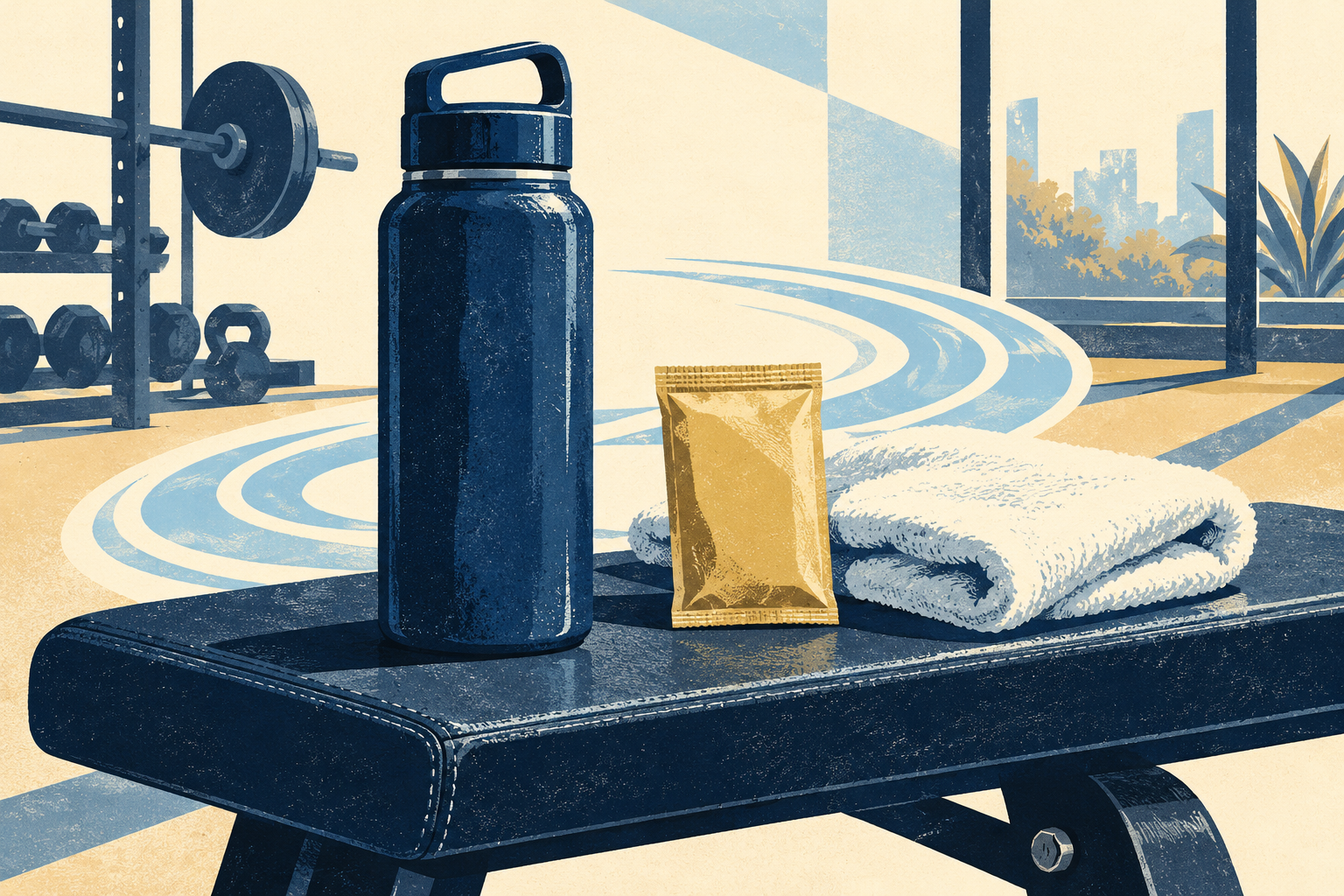
An imagined gym-bag decision: your water bottle is filled. Beside it sits an electrolyte sachet. Does every session need the extra step?
For many healthy adults doing an ordinary short workout, water is a reasonable default. Electrolytes aren't an automatic requirement because you've exercised. Longer, harder or very sweaty sessions deserve a closer look at your needs.
Three jobs hiding under one label
Start with the job you want the drink to do. Fluid replaces water. Electrolyte products supply minerals, particularly sodium and potassium. Carbohydrate supplies fuel. A drink can combine these jobs, but the word “hydration” doesn't tell you which ones it covers.
The Australian Institute of Sport describes sports drinks as a convenient way for athletes to take in fluid and carbohydrate together. It also lists electrolyte products that provide little or no carbohydrate. Those are different tools. A sugar-free electrolyte drink cannot be assumed to cover a carbohydrate-fuelling need.
What's in the bottle—and what job does it do?
- Fluid
Plain water
Supplies water, without carbohydrate fuel or added electrolytes.
- Fluid + minerals
Electrolyte mix
Prepared drink supplies electrolytes. Some products contain little or no carbohydrate; check the label.
- Fluid + minerals + fuel
Carbohydrate sports drink
Combines carbohydrate with fluid and electrolytes for a fuelling and hydration purpose.
Match the drink to the session
The National Athletic Trainers' Association gives a general rule: activity under an hour usually needs water alone. Longer exercise or intense intervals may benefit from carbohydrate or electrolytes, especially in demanding environments. This is guidance for physically active people, rather than a promise that the clock determines your needs.
Consider two illustrative plans: a 40-minute indoor session with rests between exercises, and a 90-minute outdoor ride in heat. They raise different questions about duration, effort, conditions and drinking opportunities. The examples aren't prescribed workouts or a test you must pass before using a drink.
Ask what changes in your actual session. “I went to the gym” leaves out more than it explains.
Evidence: [1]
Turn the packet over
Back beside the gym bag, compare the nutrition information with the drink you will actually make. Check carbohydrate and sodium, the stated serving, and the mixing instructions. A sachet and a ready-to-drink bottle need not have the same composition.
Here's an invented label example, purely to practise the calculation: 6 grams of carbohydrate per 100 millilitres becomes 30 grams in 500 millilitres. Multiply by five. That tells you the carbohydrate in that example bottle; it doesn't establish that you need it, or give a target for your workout.
For a powder, compare the prepared drink at the instructed dilution. Don't treat a more concentrated mix as an upgrade. If your question is fuelling a long event, a zero-carbohydrate product answers a different question.
Before you buy or mix a drink
Name the session
Write its duration, effort and conditions. Flag a long, hot or unusually sweaty session for individual advice.
Name the job
Are you asking about fluid, electrolyte replacement, carbohydrate fuel—or more than one?
Read the prepared serving
Check carbohydrate, sodium and mixing instructions. For per-100-ml values: 500 ml means five servings, so multiply by five.
Keep your own limits
Follow any prescribed fluid or salt advice. A product label cannot assess your medical needs.
Make room for drinking, not a bottle challenge
Regular fluids across the day matter too; NHS guidance notes that food and other drinks contribute. Keeping water accessible is a useful starting habit. You don't need to turn it into a competition to empty a large bottle.
Excessive drinking during exercise can be harmful, and adding sodium doesn't make overdrinking safe. This article therefore doesn't set a universal litre target. If you have prescribed fluid or salt limits, keep those instructions and ask your healthcare professional before changing them.
In our imagined scene, the next useful step is to check today's session before opening the sachet. You may keep water as your default, or identify a specific question for a qualified sports dietitian. Either choice should have a reason beyond the packet looking more serious.
Bring a clearer question to IMFIT
At IMFIT Madhapur, trainer guidance is included in strength and cardio training. Ask the team to explain the planned session: how long you'll train, which parts are demanding and where you can pause. Those details help you describe your routine when seeking individual nutrition advice.
For a personalised hydration or endurance-fuelling plan, consult a qualified sports dietitian or healthcare professional. A coach explaining your workout and a professional assessing your nutrition needs can each answer a more useful question than “Which sachet should everyone buy?”
Questions people ask
Does a cramp prove I need electrolytes?
No. Exercise-associated cramps have several possible contributors, including fatigue and unfamiliar exercise. The AIS describes uncertainty around sodium replacement for cramps. Recurrent or concerning symptoms deserve individual assessment, rather than repeated self-treatment with supplements.
Evidence: [3]
Is pharmacy ORS the same as a gym sports drink?
No. Oral rehydration solutions are generally formulated for dehydration associated with diarrhoea or gastroenteritis. Their composition and purpose differ from carbohydrate sports drinks. Follow appropriate healthcare advice for illness; don't use this workout article as treatment guidance.
Evidence: [3]
Build your next step
Sources and further reading
- NATA: Fluid Replacement for the Physically Active — 2017 position statement; checked 13 October 2026
- Australian Institute of Sport / ASC: Sports drinks — composition and use; checked 13 October 2026
- Australian Institute of Sport / ASC: Electrolyte supplement — scope and cautions; checked 13 October 2026
- NHS: Water, drinks and hydration — everyday fluid intake; checked 13 October 2026
Sources checked 2026-10-13.
This article is for general information and does not replace professional medical advice. Consult a qualified healthcare professional for guidance suited to your needs.
Understand the session you're preparing for.
Meet the IMFIT Madhapur team and ask how the strength and cardio program fits your starting level. Discuss your planned session and coaching support; take individual hydration and fuelling questions to a qualified professional.
Discuss your starting routine