Check the meal gap
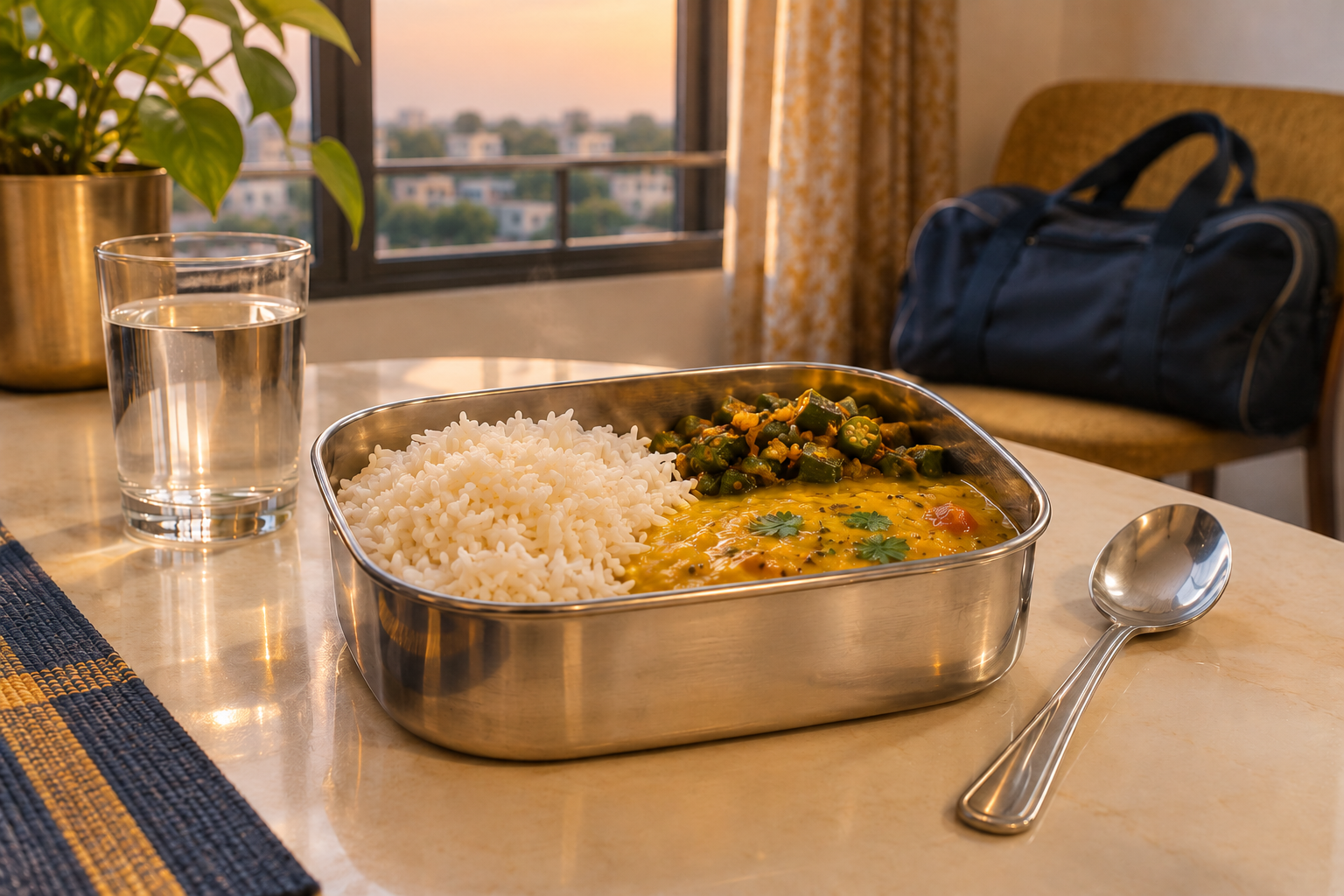
Exercise doesn’t make everyone hungrier, and hunger isn’t a calorie counter. Check when you last ate and when dinner will be ready. If it’s much later, plan a familiar snack option after training.
Feeling hungry and eating more are different measurements
Researchers can ask people to rate their hunger and separately measure the food they eat. Those answers need not move together.
A 2017 analysis combined data from 17 exercise experiments involving 192 young, healthy men. At group level, a single aerobic session briefly reduced hunger but did not change food intake. Hunger ratings and food intake were assessed in different subsets of that total sample.
That helps explain the distinction; it doesn’t predict your dinner. The work involved aerobic exercise in young men, not every Indian beginner or a long-term lifting programme. The authors also cautioned that apparent differences between people can partly reflect ordinary measurement variation.
Evidence: [3]
Two questions. Two measurements.
- Appetite rating
How hungry do you feel?
A reported sensation. In the study, hunger fell briefly after exercise.
- Food intake
What did you actually eat?
A separate food-intake measurement. It did not change at group level in that analysis.
Evidence: [3]
Lifting does not come with one appetite response
A 2024 scoping review found 17 short-term and nine longer-term resistance-training studies. The evidence leaned towards appetite suppression immediately after lifting, but the authors called for more complete research. It does not establish that starting the gym inevitably makes you eat more.
A separate 2025 review of single exercise bouts in people living with overweight or obesity found lower average hunger and food intake. That is a short-term group finding in a particular population, not a reason to train in order to suppress a meal.
Keep the useful boundary: neither “I’m hungry” nor “I’m not hungry” is a reliable score for workout quality. The training you completed and the food you need deserve their own attention.
Work through the evening, not just the gym hour
Here is an imagined Hyderabad evening. A beginner finishes a familiar session at 6:45 PM. Lunch was at 1:30 PM, and there was no afternoon snack. Dinner is still being prepared. “The gym made me hungry” may leave out much of that day. The timetable alone cannot prove what caused the hunger.
If dinner will be ready at 7:15 PM, she can plan around that ordinary meal. If it won’t be ready until 9:15 PM, there is a two-and-a-half-hour gap after the session. Having a familiar snack available gives her an option before she gets home. Fruit with plain curd, if tolerated, is one example; preferences, appetite and individual needs determine the choice.
Mayo Clinic suggests a meal containing carbohydrate and protein after exercise, and considering a snack when the meal is more than two hours away. That is planning guidance, not a deadline that makes dinner useless if it is late. Ordinary foods can fit: rice or roti, dal or beans, and vegetables can remain part of the wider day. ICMR–NIN emphasises variety rather than building a diet around one nutrient.
Where is your next meal?
After the gym
Dinner is soon
Plan around the ordinary meal rather than assuming a special recovery product is required.
Dinner is much later
Have a familiar snack option available. In the worked example, dinner is 2½ hours away.
The pattern is unclear
Note meal timing, the session and what you ate. Review repeated gaps with suitable advice.
Evidence: [4]
Make the next visit easier to interpret
Before the next visit, our imagined beginner can make one arrangement: a familiar snack she tolerates will be available after training if dinner is still planned for 9:15. If dinner can be ready at 7:15 instead, she can plan around that meal. The choice is made before the gap arrives. These times illustrate a decision, not recommended meal intervals.
On the next few visits, note what actually happened: the last food, the session, when hunger appeared and what was eaten afterwards. A brief record can reveal a repeated food gap. It cannot diagnose a hormone problem or calculate your energy needs.
Avoid turning the note into another demand to eat less. If appetite changes are persistent or worrying, or you need an individual food plan, discuss them with a qualified healthcare professional or dietitian. Follow any existing medical nutrition advice rather than using this example to replace it.
Evidence: [4]
Bring the timetable to the training conversation
At IMFIT Madhapur, ask how a suitable training session can fit your available days and ordinary meal routine. Angadh offers individual free-weight and movement practice with shared trainer demonstrations and corrections; the trainer also attends to others. Dedicated one-to-one PT is separate.
A useful question is: “This is when I usually eat and when I can arrive. What training format and session plan could fit?” The team can discuss training arrangements; this is not a clinical nutrition assessment. Sunday is closed. An enquiry is a request, with arrangements confirmed by the team.
Questions people ask
Do I need a shake if dinner is already planned?
A special shake is not automatically required. Mayo’s guidance includes ordinary carbohydrate-and-protein meals or snacks. Consider the food you already eat and your individual needs before adding a product.
Evidence: [4]
What if I’m not hungry immediately after exercise?
A temporary change in appetite can occur after exercise. It does not, by itself, tell you that recovery food or your usual meals are unnecessary. Consider your wider eating pattern and get individual advice if eating after training is repeatedly difficult.
Build your next step
Sources and further reading
- Panissa et al. Resistance training, appetite and energy intake: scoping review (Appetite, 2024; original author abstract checked 13 November 2026)
- Acute exercise, appetite and energy intake in people with overweight or obesity: systematic review and meta-analysis (2025; abstract checked 13 November 2026)
- King et al. Individual variation in hunger and food-intake responses to acute exercise (2017; original author abstract checked 13 November 2026)
- Mayo Clinic: Eating and exercise; meal and snack planning after activity (checked 13 November 2026)
- ICMR–NIN Dietary Guidelines for Indians 2024: variety and a balanced diet, PDF (checked 13 November 2026)
- IMFIT: current membership and coaching formats (checked 13 November 2026)
- IMFIT: current contact details and team-confirmed enquiries (checked 13 November 2026)
Sources checked 2026-11-13.
This article is for general information and does not replace professional medical advice. Consult a qualified healthcare professional for guidance suited to your needs.
Fit the session into your day
Tell the IMFIT team when you can train and ask how the coaching format and planned work can fit your routine.
Discuss training at IMFITWas this useful?
A little feedback helps us choose what to explain next.
Your questions & thoughts
What would help you put this into practice?
Comments appear after review. Keep it kind and relevant; please leave out phone numbers, medical details and other private information.
Loading reader comments…
Leave a comment +